The Cloud Won the Last Decade of AI. The Edge Decides the Next One.

Managing Partner
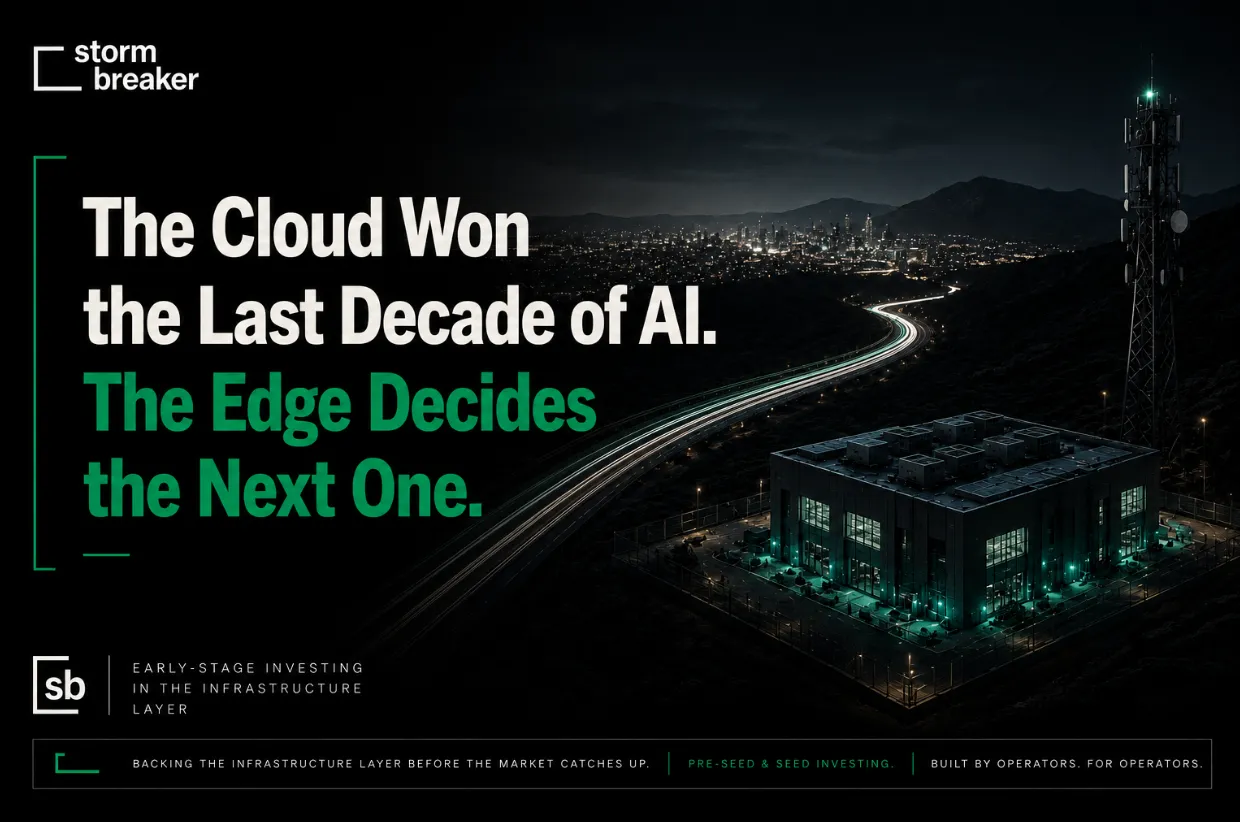
- Intelligence is moving into the physical world - robots, sensors, industrial machines, vehicles - not as a bolted-on feature but as the operating model.
- Full on-device compute is too expensive at scale, and the cloud is too far away. Physics is not negotiable: distance is latency, and latency decides whether a system acts in real time.
- Inference is becoming a property of the network itself. Every physical AI deployment adds load to that layer, and very few investors are underwriting it.
For most of the last decade, AI lived in the cloud. You sent data up, waited for a response, and got an answer back. That loop worked fine when the stakes were low and the questions could wait.
It does not work when a robot on a factory floor needs to make a safety decision in 40 milliseconds. Or when an autonomous vehicle enters a tunnel and loses its uplink. Or when a surgical assistant cannot afford a 200 millisecond round trip to a data center in another state.
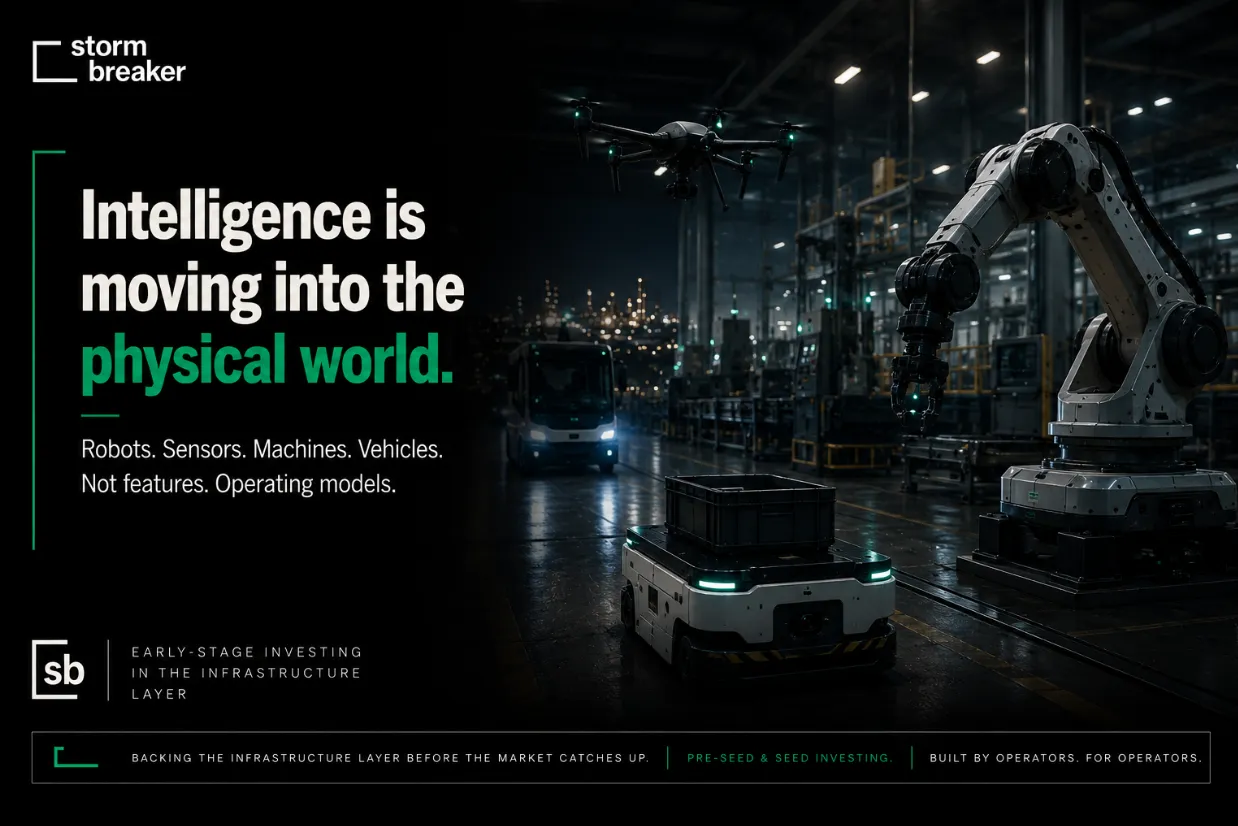
The shift happening right now is that intelligence is moving into the physical world. Robots, sensors, industrial machines, vehicles. Not as a feature bolted onto existing products, but as the operating model. And that shift creates a problem the industry has not fully solved.
Too Expensive on the Device, Too Far in the Cloud
Putting enough compute on the device itself is expensive. A robot carrying the processing power to run full inference locally costs significantly more per unit, draws more power, generates more heat, and obsoletes faster as models improve. For most deployments at scale, that math does not close. The economics push intelligence off the device.
But the cloud is too far away. Physics is not negotiable: distance is latency, and latency is the difference between a system that acts in real time and one that reacts after the fact.
Distance is latency, and latency is the difference between a system that acts in real time and one that reacts after the fact.
So where does inference actually happen? The network. Specifically, the edge of the network. Close enough to the device that latency drops to something usable. Far enough from the device that the compute can be shared, upgraded, and amortized across many endpoints. The inference layer is becoming a property of the network itself, which means physical AI is a telco story as much as it is a hardware story.
Close enough for real-time. Far enough to scale. Shared, upgraded, and amortized across many endpoints - the inference layer is becoming a property of the network itself.
Every physical AI deployment adds load to the layer in the middle.
The Layer Nobody Is Underwriting
That sentence still surprises people, and the surprise is the opportunity. The investors crowding into robotics are underwriting the device. The investors crowding into models are underwriting the intelligence. Very few are underwriting the layer in between, the one that every robot, sensor array, and autonomous system adds load to the moment it ships.
The demand curve for that layer is not speculative. It compounds mechanically with every physical AI deployment, the way data center demand compounded with every SaaS company in the last cycle. The companies building it, across edge compute, private wireless, and AI-native network architecture, are sitting on something most of the market has not priced yet.
The cloud won the last decade of AI. The edge is where the next one gets decided, and it is being built now, mostly out of view. That is the part of the market we underwrite.
Building in the Connected Ecosystem? We find them early. We help them win.
Get in Touch→Perspectives from the connected ecosystem, in your inbox.
Occasional field notes on AI-native connectivity, edge compute, and the infrastructure layer we invest in. No noise.