
The Constraint on American Manufacturing Is the Network

Managing Partner
- Tesla's Shanghai Gigafactory outproduces Fremont with the same company, cars, and robots. A major part of the difference is the density of low-latency network touchpoints built into the facility floor.
- Hundreds of billions in reshoring capital are funding new American facilities right now. A facility designed today either has connectivity engineered into the floor or spends the next decade retrofitting it at multiples of the cost.
- The companies providing private wireless, edge compute, and low-latency industrial networking are raising at seed. The window to invest at infrastructure prices, before carrier procurement cycles open, is narrow.
Tesla's Shanghai Gigafactory is significantly more productive than Fremont. Same company. Same cars. Same robots.
A major part of the difference is connectivity: the density of low-latency network touchpoints built into the facility floor. The robots in both factories are capable of the same work. What separates a world-class operation from one running below its ceiling is how fast information moves between machines, sensors, and the systems coordinating them.
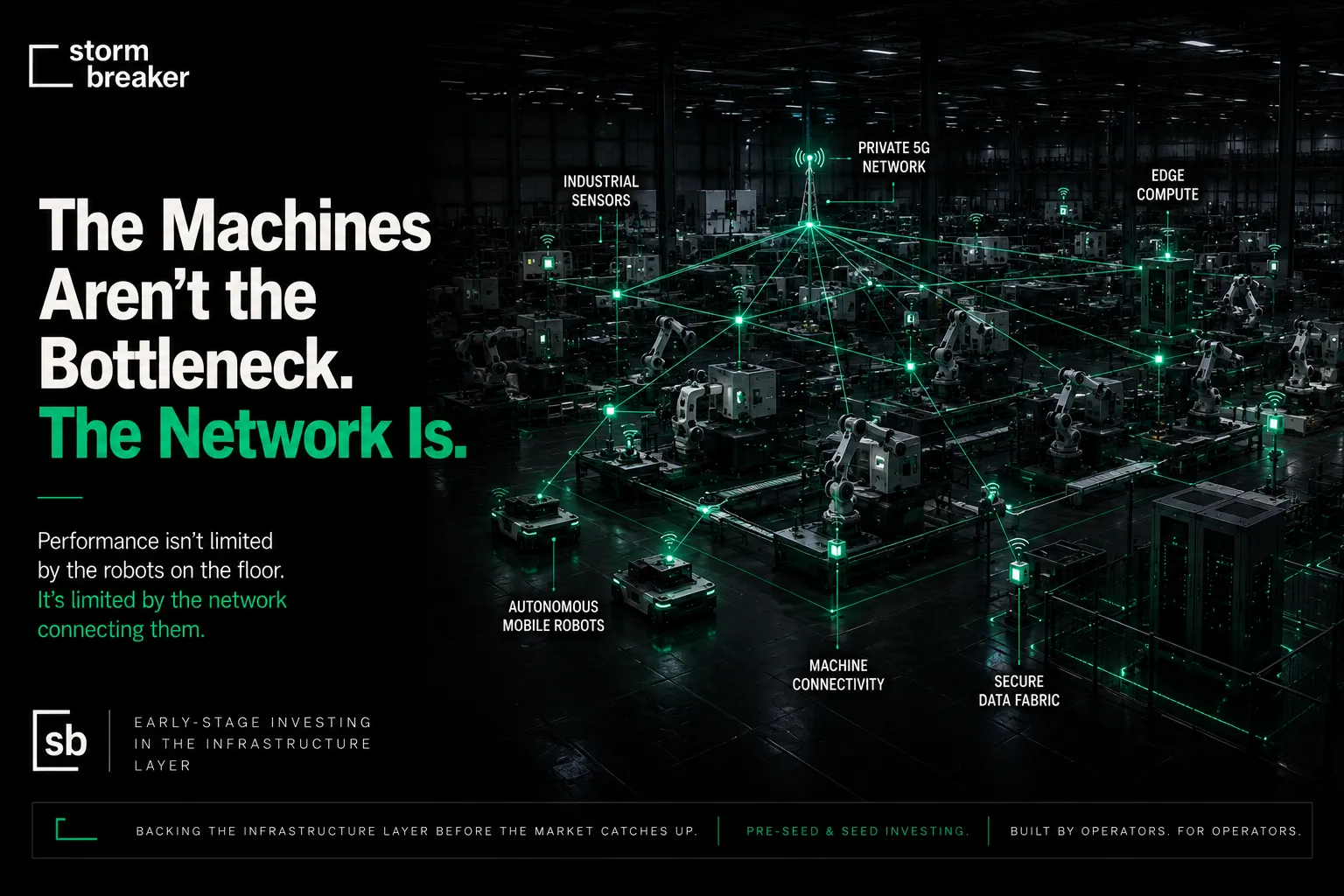
This pattern repeats across American manufacturing, and we see it directly through portfolio companies deploying in industrial environments. The software works. The hardware works. The facility's internal connectivity is what throttles the whole system. The robots are ready. The AI models are ready. The network is the constraint.
A Different Technological Plane
When American manufacturing executives visit Chinese plants, they do not come back talking about automation. Automation they have. They come back saying the operation feels like it is running on a different technological plane, and they are right about what they are sensing even when they misname it. The difference is not the machines on the floor. It is the invisible layer those machines are connected through.
Design It In. Or Pay Later.
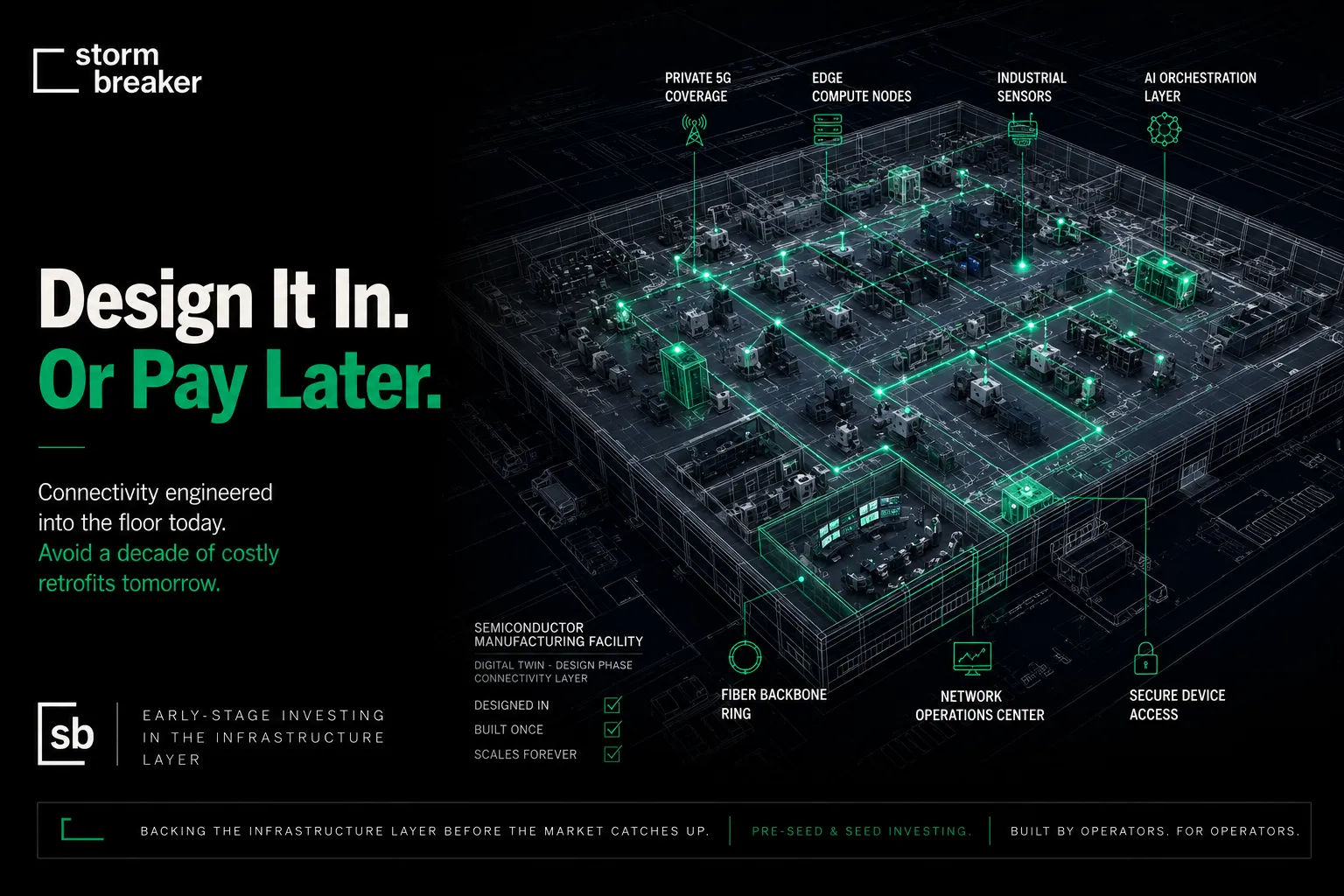
The timing is what makes this an investment story rather than just an industrial observation. Hundreds of billions in reshoring capital are funding new American facilities right now through the CHIPS Act and related programs. Every one of those facilities is being designed today, and a facility designed today either has connectivity engineered into the floor or spends the next decade retrofitting it at multiples of the cost. The companies providing private wireless, edge compute, and low-latency industrial networking to these projects need to be in the room now, during design, not after commissioning.
A facility designed today either has connectivity engineered into the floor or spends the next decade retrofitting it at multiples of the cost.
Most of those companies are raising at seed stage. The primes and carriers that will eventually acquire them are already circling, because the strategic buyers understand exactly what this layer is worth once it is installed and validated. The window to invest at infrastructure prices, before carrier procurement cycles open and valuations adjust, is narrow.
Most investors looking at manufacturing modernization are focused on the software running inside the factory. We are focused on the network that makes it run. At Stormbreaker, US manufacturing modernization is a core pillar, backed by a team that built, operated, and sold the networks these facilities will depend on.
The reshoring wave will be judged a success or failure a decade from now. Our view is that the verdict is being written into facility designs today, one network at a time.
Building in the Connected Ecosystem? We find them early. We help them win.
Get in Touch→Perspectives from the connected ecosystem, in your inbox.
Occasional field notes on AI-native connectivity, edge compute, and the infrastructure layer we invest in. No noise.