Why the Next Infrastructure Wave Lives in the Physical Layer
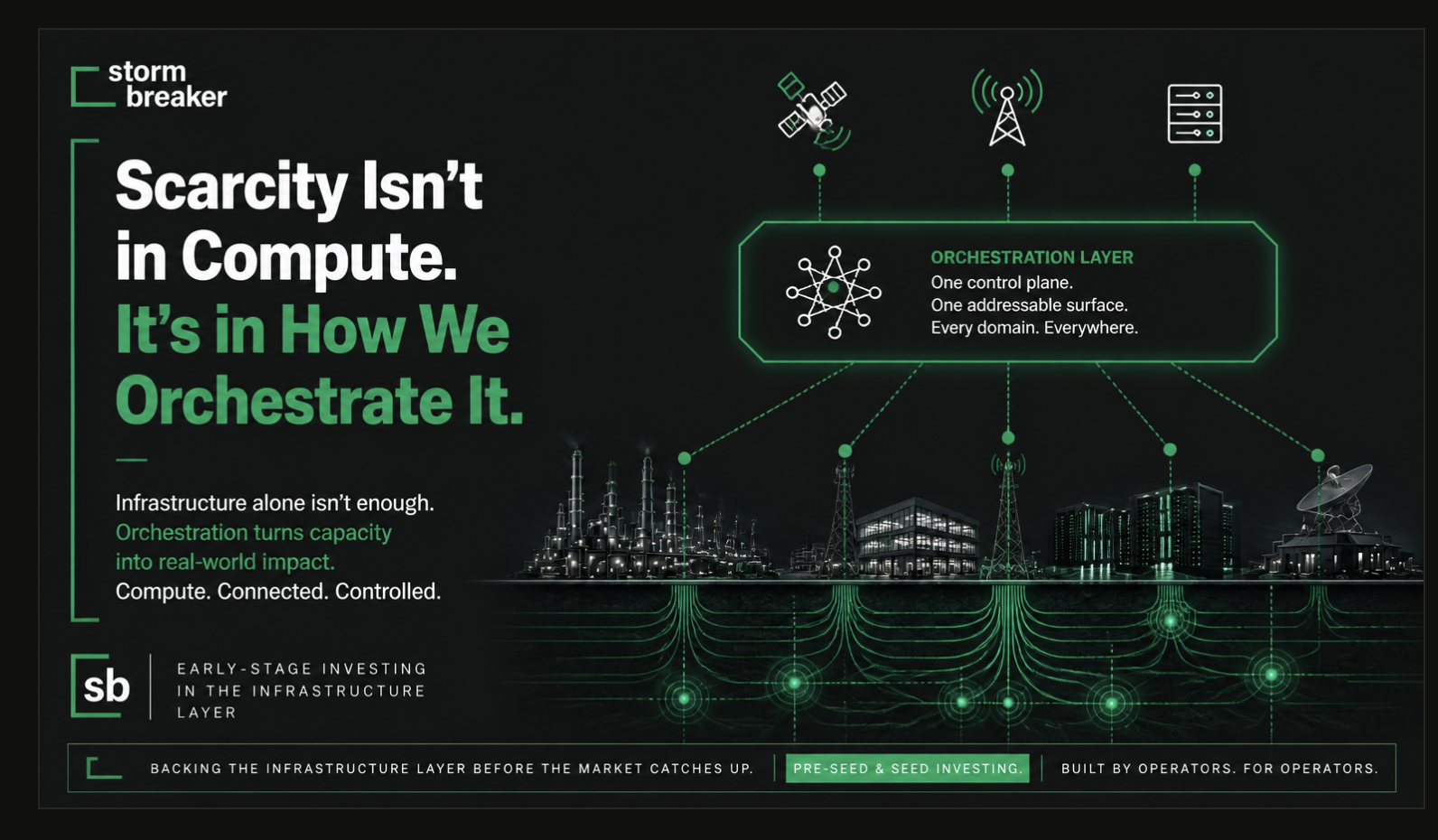
- More than $1 trillion has been spent on global 5G infrastructure since 2020, while the software and intelligence layers needed to unlock industrial use cases remain underbuilt.
- Stormbreaker focuses on the physical-layer infrastructure of the connected ecosystem, including private networks, AI-RAN, Open RAN, edge compute, satellite convergence, and industrial IoT.
- Specialized operator experience creates an advantage in diligence, customer access, and potential strategic outcomes.
The connectivity layer underneath the physical world is still being built.
Carriers have spent more than $1 trillion on 5G infrastructure globally since 2020. Most of that capital went into radios, spectrum, and towers. Almost none of it went into the software and intelligence layers that actually make those networks useful for factories, ports, logistics hubs, and industrial campuses.
That gap is where Stormbreaker Ventures is placing its bets.
The firm backs pre-seed and seed-stage startups building the physical-layer infrastructure of the connected ecosystem: private LTE and 5G networks, AI-native radio access networks, Open RAN, edge compute, satellite-to-cellular convergence, and industrial IoT. It is a corner of the market that most generalist VCs find too capital-intensive, too sales-cycle-heavy, and too close to the carrier world to underwrite confidently. Stormbreaker sees that as the point.
Who built this firm and why it matters
Said Mia founded Stormbreaker after years as a technology investment banker at Citi and then as a Vice President at PJT Partners, advising telecom, semiconductor, and infrastructure companies on major transactions. He saw the same pattern repeatedly: carriers were spending at scale, the monetization layer was thin, and no early-stage firm had the operator credibility to back the startups filling that gap.
The general partner roster he assembled is unusual for a seed-stage fund. Wade Oosterman founded Clearnet Communications, which Telus acquired for $6.6 billion, and later added $50 billion in market cap during his time in the Bell Canada C-suite. Derek Aberle served as President of Qualcomm for nearly a decade. Glenn Lurie was President and CEO of AT&T Mobility and Consumer Operations.
These are operators who have been on the buying side of enterprise telecom deals. They know what a carrier's procurement process looks like from the inside, which is a different kind of diligence than a generalist VC can run.
That operator background shapes how Stormbreaker evaluates deals. The GPs have been the customer, the partner, and the acquirer. They understand radio physics, long enterprise sales cycles, and the specific moats that make connectivity infrastructure defensible over time.
The actual thesis: physical systems need their own intelligence layer
Most venture capital in the connectivity space has chased software abstractions sitting on top of commodity networks. Stormbreaker's conviction runs in the opposite direction. The firm argues that the next wave of infrastructure value lives in the connectivity layer itself, where physical systems become intelligent.
A few concrete examples of what that looks like in practice:
• Private LTE and 5G replacing Wi-Fi in factories, ports, and campuses where reliability and latency requirements exceed what shared spectrum can deliver.
• AI-RAN: software that makes radio access networks adaptive and self-optimizing rather than static infrastructure managed by legacy vendors like Ericsson and Nokia.
• Satellite-to-cellular convergence, where low-earth-orbit networks and terrestrial 5G begin to operate as a single unified layer for mobile and IoT coverage.
• Edge compute distributed close to the physical asset, cutting the round-trip latency that makes real-time industrial automation viable.
Each of these requires deep domain knowledge to evaluate. You cannot underwrite an AI-RAN startup from a generalist software lens. The physics, the spectrum policy, the carrier procurement dynamics, and the enterprise sales motion are all specific to this world.
Why most VCs avoid this space and why that creates the opening
Connectivity infrastructure sits in an uncomfortable middle ground for most early-stage funds. The market is large but the sales cycles are long. The technical moats are real but require specialized diligence. The likely acquirers are carriers and large enterprise buyers, which are not the typical acquirer universe that consumer or SaaS-focused VCs model against.
Stormbreaker's position is that this avoidance is the opportunity. The $1T+ in carrier capex created a sprawling installed base of 5G infrastructure with a thin software layer on top. Startups that solve the monetization and intelligence problem for that infrastructure have natural buyers in the carriers and enterprises that already own the hardware. The GP network at Stormbreaker includes C-suite relationships at the carriers and enterprise buyers most likely to acquire portfolio companies, which is a structural exit advantage that most seed funds cannot replicate.
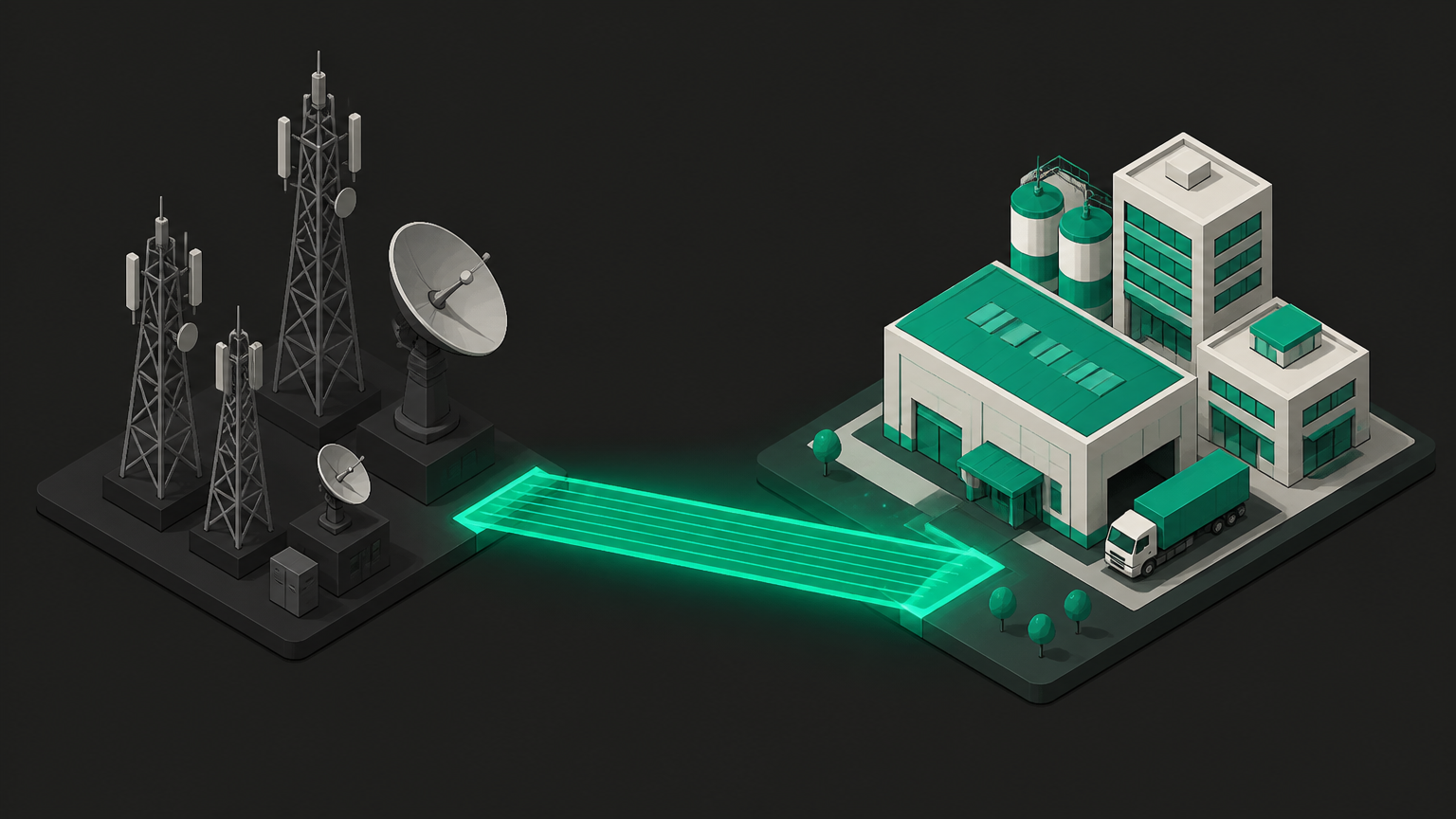
The gap between carrier infrastructure and enterprise monetization is where Stormbreaker invests.
Building in the Connected Ecosystem? We find them early. We help them win.
Get in Touch→Perspectives from the connected ecosystem, in your inbox.
Occasional field notes on AI-native connectivity, edge compute, and the infrastructure layer we invest in. No noise.